
Blogs

Understanding the Preschool Franchise Business
The demand for quality early childhood education has grown significantly over the past few years. As more parents recognize the importance of preschool education, many entrepreneurs are exploring opportunities in this rapidly growing sector. One of the most popular options is investing in a preschool franchise.
If you’ve ever wondered, “What is a preschool franchise and how does it work?”, this guide will help you understand the concept, its benefits, the business model, and what to consider before starting your own preschool franchise.
What Is a Preschool Franchise?
A preschool franchise is a business model where an entrepreneur operates a preschool using the brand name, curriculum, teaching methods, and support of an established preschool company.
Instead of building a preschool from scratch, the franchise owner receives a proven system that includes training, operational guidance, marketing support, and educational resources.
The entrepreneur manages the day-to-day operations while following the standards and guidelines set by the franchisor.
How Does a Preschool Franchise Work?
The process is designed to help new business owners start with confidence.
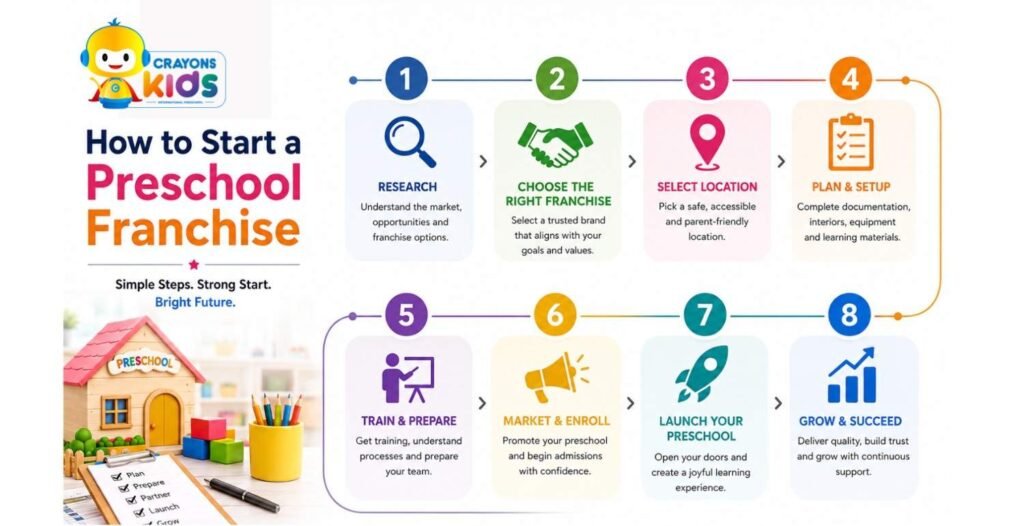
Typically, it works like this:
- Choose a preschool franchise brand.
- Apply to become a franchise partner.
- Complete the required agreement and documentation.
- Set up the preschool according to brand guidelines.
- Receive teacher and management training.
- Launch admissions with marketing support.
- Operate the preschool using the established curriculum and systems.
The franchisor continues to provide guidance, helping maintain quality education and consistent standards.
Why Preschool Franchises Are Growing
Parents today are looking for trusted schools that offer a safe environment and quality education.
This increasing demand has made preschool franchises one of the fastest-growing education businesses.
Some reasons behind this growth include:
- Rising awareness of early childhood education
- Increasing number of working parents
- Demand for structured learning before primary school
- Growing urban population
- Preference for trusted educational brands
As a result, preschool franchises have become an attractive business opportunity in many cities and towns.
Benefits of Starting a Preschool Franchise
Choosing a franchise offers several advantages over starting an independent preschool.
Established Brand Recognition
A recognized brand already has credibility among parents.
Families often feel more confident enrolling their children in a preschool with a trusted reputation.
Proven Business Model
Franchise businesses follow tested systems that reduce many of the risks associated with starting a completely new business.
Operational procedures, curriculum, admissions, and marketing strategies are already developed.
Comprehensive Training
Most preschool franchises provide training for:
- School management
- Teachers
- Classroom activities
- Child safety
- Parent communication
- Administration
This support is especially valuable for entrepreneurs with little or no education industry experience.
Curriculum Support
Creating a preschool curriculum requires expertise.
Franchisors usually provide:
- Lesson plans
- Activity books
- Learning materials
- Assessment methods
- Teaching guides
This ensures children receive age-appropriate and engaging education.
Marketing Assistance
Many franchise companies support new centers with:
- Digital marketing
- Admission campaigns
- Promotional materials
- Social media guidance
- Branding support
This helps attract parents more effectively during admissions.
Responsibilities of a Franchise Owner
Although the franchisor provides support, the franchise owner plays an important role in the preschool’s success.
Responsibilities typically include:
- Managing daily operations
- Hiring qualified staff
- Maintaining cleanliness and safety
- Following curriculum guidelines
- Communicating with parents
- Managing admissions
- Ensuring high-quality learning experiences
Successful franchise owners focus equally on education, customer service, and efficient management.
Choosing the Right Location
Location is one of the most important factors in the success of a preschool franchise.
An ideal location should have:
- Residential neighborhoods nearby
- Good road connectivity
- Safe surroundings
- Easy parking
- Growing family population
- High visibility
Being close to the target audience makes it easier for parents to access the preschool.
Facilities Needed for a Preschool Franchise
A quality preschool should provide a child-friendly environment.
Essential facilities include:
- Spacious classrooms
- Activity areas
- Indoor play zone
- Outdoor playground
- Child-friendly furniture
- Safe washrooms
- CCTV surveillance
- Reception area
- Learning resources
- First aid facilities
A welcoming environment creates a positive first impression for parents and children.
Teacher Recruitment and Training
Teachers are the foundation of every successful preschool.
Look for educators who are:
- Patient
- Caring
- Creative
- Skilled in early childhood education
- Good communicators
- Passionate about teaching young children
Many franchise companies provide ongoing training to help teachers stay updated with modern teaching methods.
What Children Learn in a Preschool Franchise
Quality preschool franchises focus on overall child development through play-based learning.
Children usually participate in:
- Storytelling
- Music and rhymes
- Art and craft
- Outdoor activities
- Sensory learning
- Early literacy
- Number concepts
- Language development
- Creative play
- Social interaction
The goal is to develop confidence, curiosity, and essential life skills rather than simply teaching academics.
Factors to Consider Before Investing
Before selecting a preschool franchise, evaluate several important aspects.
Brand Reputation
Research the company’s experience, success stories, and parent reviews.
Curriculum Quality
Ensure the curriculum supports holistic child development through engaging activities.
Training and Support
Choose a franchise that provides continuous assistance instead of support only during setup.
Investment Requirements
Understand all expenses, including setup costs, infrastructure, staff recruitment, marketing, and ongoing operational costs.
Transparency
Read the franchise agreement carefully and understand the responsibilities of both parties before signing.
Common Challenges
Like any business, running a preschool franchise comes with responsibilities.
Some common challenges include:
- Managing admissions
- Recruiting skilled teachers
- Maintaining quality standards
- Building parent trust
- Adapting to changing educational trends
Strong planning and consistent management help overcome these challenges successfully.
Why Parents Prefer Franchise Preschools
Many parents choose branded preschool franchises because they offer:
- Standardized curriculum
- Safe learning environment
- Qualified teachers
- Modern classrooms
- Structured learning activities
- Consistent educational quality
These factors give parents confidence that their child will receive a strong start to their educational journey.
Is a Preschool Franchise Right for You?
A preschool franchise can be an excellent opportunity if you:
- Enjoy working with children
- Want to contribute to education
- Have strong management skills
- Are willing to follow established systems
- Want to build a long-term business
Even individuals without a teaching background can successfully operate a preschool franchise with proper training and support.
Conclusion
A preschool franchise offers entrepreneurs the opportunity to enter the growing early childhood education sector with the support of an established brand. From curriculum and teacher training to marketing and operational guidance, the franchise model simplifies many aspects of starting a preschool business.
Success depends on choosing the right franchise, maintaining high educational standards, creating a safe learning environment, and building strong relationships with parents. With careful planning and dedication, a preschool franchise can become both a rewarding business venture and a meaningful contribution to children’s early education.