
Blogs
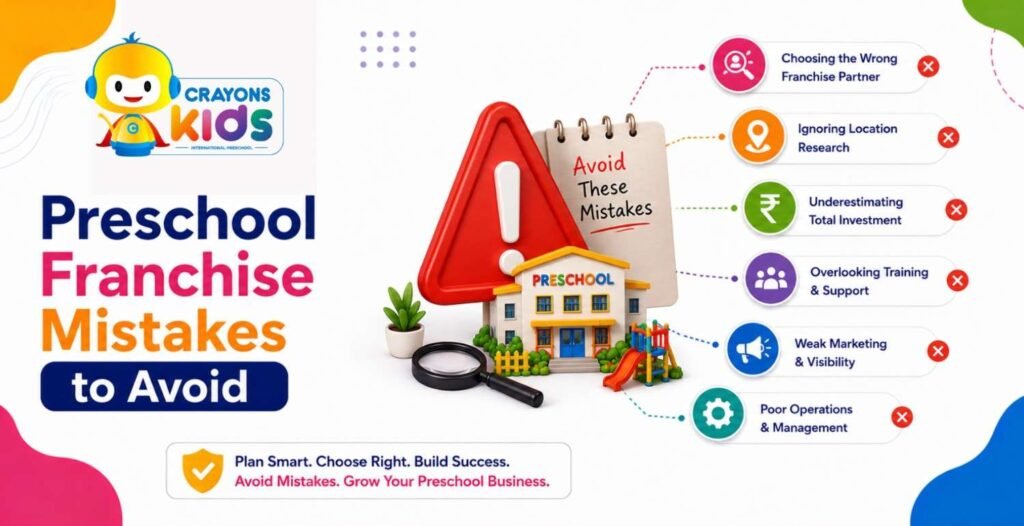

Preschool Franchise Mistakes to Avoid Common Mistakes That Can Affect Your Preschool Franchise Success
Starting a preschool franchise is an exciting opportunity for entrepreneurs who want to build a successful business while contributing to children’s early education. A franchise offers several advantages, including an established brand, proven business systems, curriculum support, and training. However, even with these benefits, success is not guaranteed.
Many new franchise owners make avoidable mistakes that affect admissions, parent satisfaction, and overall business growth. Understanding these common challenges before launching your preschool can help you build a strong foundation and achieve long-term success.
Choosing a Franchise Without Proper Research
One of the biggest mistakes is selecting a preschool franchise based only on advertisements or low investment costs.
Before making a decision, carefully evaluate:
- Brand reputation
- Years of experience
- Curriculum quality
- Franchise support
- Parent reviews
- Existing franchise network
- Success stories
Choosing a trusted preschool brand with a proven track record can significantly improve your chances of success.
Ignoring Local Market Research
Every location has different educational needs.
Some entrepreneurs invest without studying:
- Local competition
- Population of young families
- Demand for preschool education
- Income levels
- Parent expectations
Researching your target market helps you choose the right location and plan admissions more effectively.
Selecting the Wrong Location
Location plays a major role in preschool admissions.
Avoid choosing a property simply because the rent is lower.
Instead, look for locations that offer:
- Easy accessibility
- Residential neighborhoods
- Safe surroundings
- Good road connectivity
- Parking availability
- High visibility
A convenient location makes it easier for parents to choose your preschool.
Underestimating Total Investment
Many first-time franchise owners focus only on the franchise fee.
However, additional expenses may include:
- Building renovation
- Furniture
- Learning materials
- Play equipment
- Teacher salaries
- Marketing
- Utility bills
- Maintenance
- Licensing costs
Creating a complete financial plan helps avoid unexpected challenges after opening.
Hiring Unqualified Teachers
Teachers are one of the most important assets of a preschool.
Hiring based only on lower salaries instead of qualifications can negatively affect children’s learning experience.
Look for teachers who are:
- Patient
- Caring
- Well-trained
- Creative
- Good communicators
- Passionate about early childhood education
Investing in teacher development improves educational quality and parent satisfaction.
Ignoring Teacher Training
Even experienced teachers benefit from regular training.
Continuous learning helps teachers:
- Improve classroom management
- Learn new teaching methods
- Understand child development
- Enhance communication skills
- Deliver engaging learning experiences
Well-trained teachers create confident and happy learners.
Focusing Only on Admissions
Admissions are important, but they should not become the only priority.
Long-term success depends on:
- Quality education
- Child development
- Parent satisfaction
- Teacher performance
- Safe learning environment
Happy parents often recommend your preschool to others, leading to sustainable growth through positive word-of-mouth.
Neglecting Safety Standards
Parents expect their children to learn in a secure environment.
Never compromise on:
- CCTV surveillance
- Secure entry and exit systems
- Playground safety
- Fire safety equipment
- First aid availability
- Child-safe classrooms
- Clean drinking water
Strong safety measures build trust and confidence among families.
Poor Hygiene Practices
Young children are more vulnerable to infections.
Maintaining cleanliness should be a daily priority.
Ensure:
- Clean classrooms
- Sanitized toys
- Hygienic washrooms
- Regular cleaning schedules
- Safe food handling
- Proper waste disposal
Healthy surroundings contribute to children’s overall well-being.
Weak Parent Communication
Parents appreciate regular updates about their child’s progress.
Avoid limited communication.
Instead, provide:
- Parent-teacher meetings
- Daily activity updates
- Progress reports
- Event invitations
- Feedback opportunities
Strong communication builds lasting relationships with families.
Ignoring Marketing
Many franchise owners assume that an established brand alone will generate admissions.
While brand recognition helps, local marketing remains essential.
Effective marketing activities include:
- Social media campaigns
- Community events
- School open houses
- Referral programs
- Educational workshops
- Local advertisements
Consistent marketing increases visibility and attracts new families.
Not Following Franchise Guidelines
Every preschool franchise has established systems designed to maintain educational quality.
Some owners attempt to modify these systems without proper planning.
Following franchise guidelines ensures:
- Consistent learning experiences
- Standardized curriculum
- Better operational efficiency
- Stronger brand reputation
Always consult the franchisor before making significant operational changes.
Overlooking Classroom Experience
Parents don’t choose a preschool based only on infrastructure.
Children need classrooms that are:
- Interactive
- Creative
- Organized
- Comfortable
- Engaging
A positive classroom atmosphere encourages curiosity, confidence, and joyful learning.
Ignoring Child-Centered Learning
Some preschool owners focus too heavily on academics.
Young children learn best through play, exploration, and hands-on activities.
An effective preschool should include:
- Storytelling
- Music and movement
- Art and craft
- Outdoor play
- Sensory activities
- Group learning
- Creative projects
Play-based learning supports holistic child development.
Failing to Monitor Performance
Running a preschool requires continuous evaluation.
Regularly review:
- Admission numbers
- Parent feedback
- Teacher performance
- Student participation
- Financial performance
- Safety standards
Monitoring these areas helps identify opportunities for improvement.
Neglecting Staff Motivation
Happy teachers create positive classrooms.
Support your staff by:
- Providing training opportunities
- Recognizing achievements
- Encouraging teamwork
- Maintaining open communication
- Creating a positive work environment
Motivated teachers contribute to better learning outcomes.
Forgetting Long-Term Planning
Some entrepreneurs focus only on opening the preschool.
Long-term success requires planning for:
- Future admissions
- Curriculum updates
- Facility improvements
- Teacher development
- Community engagement
- Brand reputation
Strategic planning helps ensure sustainable growth.
Building Trust Takes Time
Parents trust preschools that consistently deliver quality education and care.
Building that trust requires:
- Honest communication
- Safe learning environments
- Qualified teachers
- Consistent educational quality
- Positive parent experiences
A strong reputation develops gradually through reliable service and excellent child care.
Tips to Avoid These Mistakes
To improve your chances of success:
- Research the franchise thoroughly before investing.
- Choose the right location carefully.
- Hire and train qualified teachers.
- Focus on safety and hygiene every day.
- Maintain open communication with parents.
- Follow the franchise’s operational guidelines.
- Invest in marketing and community outreach.
- Monitor your preschool’s performance regularly.
- Prioritize child-centered learning over academic pressure.
- Plan for long-term growth and continuous improvement.
Conclusion
Starting a preschool franchise can be a rewarding business opportunity, but avoiding common mistakes is essential for long-term success. Careful planning, choosing the right franchise, selecting a suitable location, hiring skilled teachers, maintaining high safety standards, and building strong relationships with parents all contribute to a successful preschool.
By focusing on quality education, consistent operations, and continuous improvement, you can create a trusted preschool that supports children’s early development while building a sustainable and respected business.