
Blogs

Play-Based vs Academic Preschools: Parent's Guide
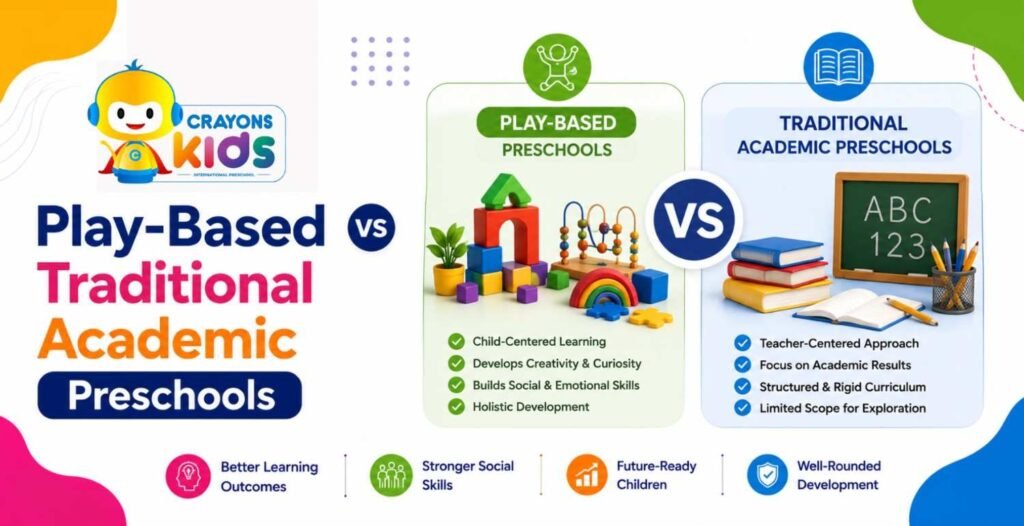
Selecting the right preschool is one of the first major educational decisions parents make for their children. With many preschool options available in India, parents often come across two common approaches: play-based preschools and academic preschools.
Both models aim to prepare children for future education, but they differ significantly in how they teach, what they prioritize, and how children learn. Understanding these differences can help parents make an informed decision based on their child’s developmental needs rather than simply following trends.
This guide explains the key differences between play-based and academic preschools, along with their benefits and factors to consider before choosing one.
Understanding Play-Based Preschool
A play-based preschool focuses on learning through exploration, creativity, and hands-on activities rather than formal classroom instruction.
Children learn naturally by:
- Playing with educational toys
- Storytelling
- Music and movement
- Art and craft
- Outdoor games
- Group activities
- Role play
- Sensory experiences
Teachers guide children while encouraging curiosity, communication, and independent thinking.
Understanding Academic Preschool
An academic preschool introduces structured classroom learning at an early age.
Children spend more time learning:
- Alphabet recognition
- Numbers
- Writing practice
- Reading readiness
- Worksheets
- Classroom discipline
- Basic mathematics
The emphasis is often on preparing children for primary school through formal instruction.
How Children Learn in a Play-Based Preschool
In a play-based classroom, learning happens naturally during everyday activities.
For example:
- Building blocks improve problem-solving skills.
- Storytelling develops language.
- Drawing enhances creativity.
- Outdoor games improve motor skills.
- Group activities teach teamwork.
Children remain actively involved while developing multiple skills simultaneously.
How Children Learn in an Academic Preschool
Academic preschools generally follow a teacher-led approach.
Learning often includes:
- Classroom instruction
- Practice worksheets
- Letter tracing
- Number writing
- Repetition exercises
- Memorization activities
This structure helps children become familiar with classroom routines and academic concepts.
Child Development Approach
One of the biggest differences lies in overall child development.
Play-based learning focuses on:
- Emotional growth
- Social interaction
- Creativity
- Confidence
- Communication
- Curiosity
- Problem-solving
Academic learning focuses more on:
- Reading readiness
- Writing skills
- Number recognition
- Classroom discipline
- Academic preparation
Both approaches have value, but they emphasize different developmental goals.
Which Approach Reduces Learning Pressure?
Young children learn best when they enjoy the learning process.
Play-based classrooms usually provide:
- Less performance pressure
- More opportunities for exploration
- Flexible learning
- Individual pace
Academic classrooms may introduce structured expectations earlier, which can suit some children but may feel overwhelming for others if expectations are not age-appropriate.
Building Social Skills
Social development is an important part of preschool education.
Play-based learning encourages children to:
- Share toys
- Work in groups
- Take turns
- Solve simple conflicts
- Express emotions
- Develop friendships
These experiences help children build confidence before entering formal school.
Academic preschools also include group interaction but may dedicate more classroom time to structured learning activities.
Creativity and Imagination
Play-based preschools encourage children to imagine, create, and experiment.
Activities often include:
- Painting
- Clay modeling
- Pretend play
- Story creation
- Music
- Dance
- Nature exploration
Creative activities strengthen imagination while supporting emotional and cognitive development.
Academic programs may include creative sessions but generally spend more time on literacy and numeracy skills.
Language Development
Both preschool models help develop language, but through different methods.
Play-based schools encourage conversation during:
- Storytelling
- Singing
- Group discussions
- Role play
- Interactive games
Academic schools focus on:
- Letter recognition
- Vocabulary
- Reading readiness
- Writing practice
A balanced language program includes both communication and literacy skills.
Preparing for Primary School
Many parents worry whether play-based learning prepares children for formal schooling.
The answer is yes.
Play-based education develops important school-readiness skills such as:
- Listening
- Following instructions
- Concentration
- Independence
- Communication
- Confidence
- Emotional regulation
These skills often help children adapt smoothly to primary school.
Academic preschools prepare children by introducing classroom routines and basic academic concepts earlier.
Teacher’s Role
In a play-based preschool, teachers act as facilitators.
They:
- Observe children
- Encourage exploration
- Ask questions
- Guide activities
- Support emotional development
In academic classrooms, teachers generally provide direct instruction and structured lessons while monitoring learning progress.
Parent Expectations in India
Many Indian parents traditionally preferred academic preschools because they believed early reading and writing would provide an advantage.
Today, however, awareness about child development has increased.
Many parents now value:
- Holistic learning
- Emotional well-being
- Confidence building
- Creativity
- Communication skills
As a result, play-based learning has become increasingly popular across India.
Which Preschool Is Better for Your Child?
There is no single answer that suits every child.
A play-based preschool may be ideal if your child:
- Enjoys exploring
- Learns through activities
- Is naturally curious
- Benefits from hands-on experiences
- Needs time to build confidence
An academic preschool may suit children who:
- Enjoy structured routines
- Like early literacy activities
- Adapt well to classroom instruction
- Show interest in reading and numbers
Every child develops differently, so individual needs should guide your decision.
Questions Parents Should Ask Before Choosing
When visiting a preschool, ask:
- What teaching approach do you follow?
- How much time is spent on play?
- How are children assessed?
- How do teachers encourage learning?
- What safety measures are in place?
- How do you communicate with parents?
- What is the daily schedule?
These questions help you understand whether the preschool matches your expectations.
Signs of a Quality Preschool
Regardless of the teaching approach, look for schools that provide:
- Qualified teachers
- Safe classrooms
- Clean facilities
- Child-friendly environment
- Age-appropriate activities
- Positive teacher-child interaction
- Strong parent communication
The quality of the preschool often matters more than the label attached to its teaching method.
Finding the Right Balance
Many leading preschools today combine the strengths of both approaches.
They introduce:
- Play-based learning
- Creative exploration
- Early literacy
- Basic numeracy
- Social development
- Physical activities
- Life skills
This balanced approach supports overall child development while preparing children for future academic success.
Common Myths About Play-Based Learning
Some parents believe children only play and do not learn.
In reality, carefully designed play activities help children develop:
- Language skills
- Memory
- Concentration
- Coordination
- Creativity
- Problem-solving
- Emotional intelligence
Play is not separate from learning—it is one of the most effective ways young children learn.
Tips for Parents
When selecting a preschool:
- Observe classroom interactions.
- Meet the teachers.
- Understand the curriculum.
- Focus on your child’s comfort.
- Avoid comparing your child with others.
- Prioritize emotional well-being along with academics.
- Choose a school that encourages curiosity and confidence.
The right preschool supports children both inside and outside the classroom.
Conclusion
Choosing between a play-based and academic preschool is an important decision, but it does not have to be confusing. Both approaches offer valuable learning experiences when implemented thoughtfully. Play-based preschools emphasize creativity, social development, confidence, and hands-on learning, while academic preschools focus on structured instruction and early literacy and numeracy skills.
For many children, a balanced preschool that combines play with age-appropriate academic learning provides the best foundation for future success. Instead of focusing only on early reading or writing, parents should look for a preschool that nurtures curiosity, emotional well-being, communication skills, and a lifelong love for learning. A strong start in these areas helps children thrive not only in school but throughout their educational journey.